Toronto Weather by Month and the Best Time to Visit
Toronto weather month by month from Environment Canada's 1981 to 2010 normals: highs, lows, rain and snow, plus the best time to visit for each season.
What's on in Toronto: November 2026 · December 2026 · January 2027 · February 2027 · March 2027 · April 2027 · May 2027 · June 2027 · July 2027 · August 2027 · September 2027 · October 2027
Month guides: Toronto in December · Toronto in January · Toronto in February · Toronto in July
Toronto has four clear seasons. July is the warmest month, with an average high of 27.1°C and a low of 15.8°C. January is the coldest, with a high of -1.5°C and a low of -9.4°C. All 15 guides read send you here in summer, and 13 add September or October as the other good window. Winter and early spring are the seasons they warn about, and the table further down has every month.
The picks below are ordered by how many guides name them. Roam Toronto read 15 guides in English, German, French, Japanese and Korean, from weather sites, travel publishers and independent blogs. Every temperature, rain and snow figure on this page comes from Environment and Climate Change Canada, and every other fact from the City of Toronto, not from those guides.
Summer: June to August
Recommended by 15 of 15 guides read.
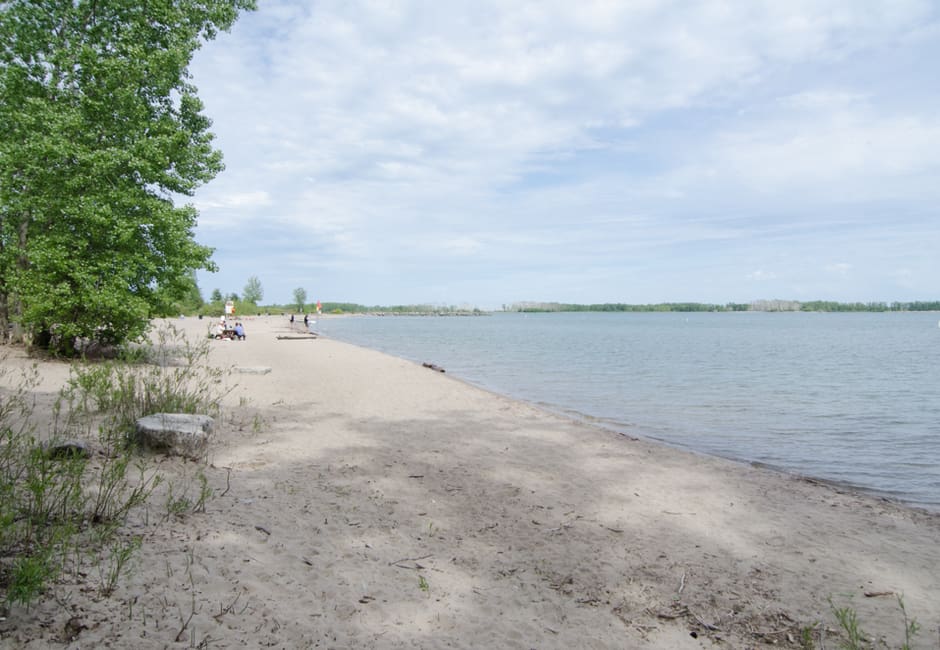
Every guide puts summer first for warm weather, patios, festivals and the lake. Highs run from 24.2°C in June to 27.1°C in July and 26.0°C in August, with no snow. Nine guides add that it is also the busiest and priciest season, so book rooms early. Seven say July and August can turn hot and humid. Days with a humidex of 30 or more average 16.9 in July and 14.8 in August, days above 30°C average 6.5 and 4.1, and thunderstorms come on about six days in July and five in August. August has the most rain of any month at 78 mm.
Six guides point to the lake. The City’s ferry page lists a summer schedule from mid-May to mid-September on all routes to Centre Island, Ward’s Island and Hanlan’s Point (City of Toronto ferry schedules). The Toronto Island Park, the Toronto Islands and the Beaches are the obvious escapes from the heat. The June, July and August events pages list the festivals.
Early autumn: September and October
Recommended by 13 of 15 guides read.
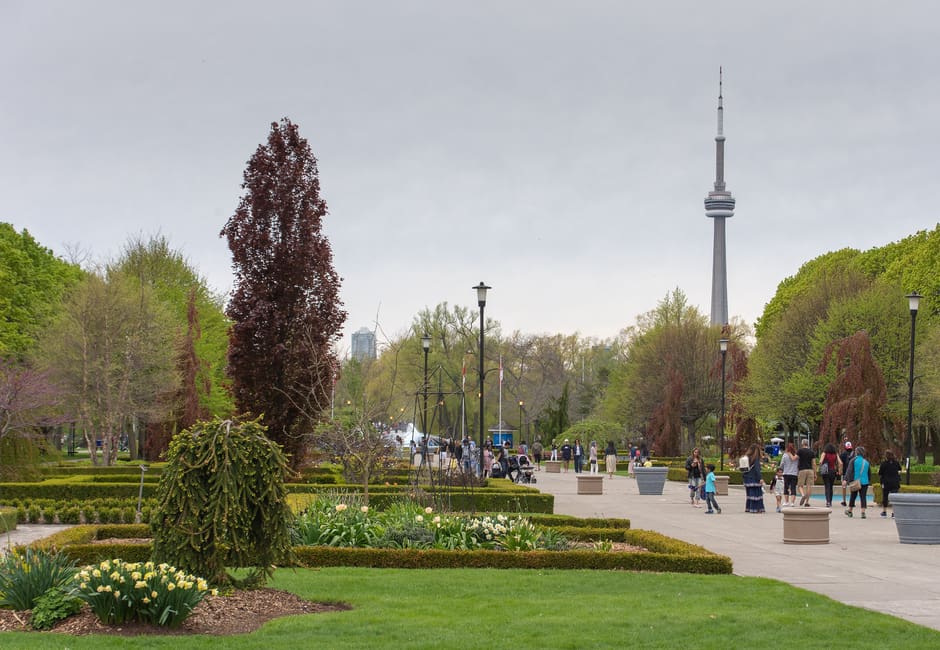
September is still warm at 21.6°C by day and 10.8°C at night, with 75 mm of rain. October drops to 14.3°C and 4.6°C, with 61 mm of rain. The first frost falls around 16 October on average. Guides like these two months for mild days, autumn colour and thinner crowds than July and August. Bring a rain jacket and a warm layer, and head to High Park and the Evergreen Brick Works for the walks. Four guides also name the Toronto International Film Festival in September, so check dates before you book a room. The September events page shows what’s on.
Late spring: May
Recommended by 9 of 15 guides read.

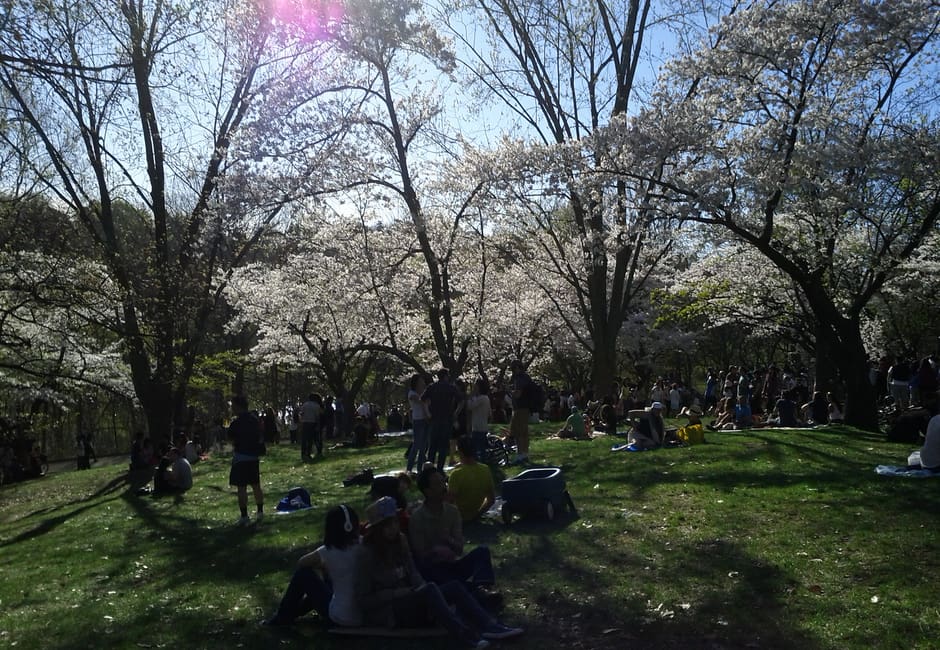
May has a high of 18.8°C and a low of 7.4°C, with no meaningful snow. June warms to 24.2°C by day and 13.0°C at night. Precipitation falls on about 11 to 12 days in each month, and thunderstorms start to show up, 3.3 days in May and 5.4 in June. Guides call it a mild, quieter window before the summer peak. Four name the cherry blossoms, which the City says bloom at the end of April to early May. It also says there is no visitor vehicle or parking access to High Park during the peak bloom, and that the High Park Nature Centre runs a Blossom Watch (City of Toronto, Cherry Blossoms). See the May and June events pages, and walk Kensington Market while it’s mild.
Winter: December to February
Named by all 15 guides read, as the season to pack for or plan around.
Winter is cold and grey, with snow on the ground for much of it. January has a daily high of 0°C or colder on about 18 days out of 31, and about 28 nights fall to 0°C or below. Snow averages 24.9 cm in December, 29.5 cm in January and 24.0 cm in February. Freezing rain turns up on about two days in January. You’ll want a warm coat, waterproof boots with grip, gloves and a hat, and 14 guides tell you to dress in layers.
Winter is also the cheapest time to visit, according to six guides, and eight point to skating and holiday events. The PATH lets you cross part of downtown underground, though only two guides mention it. Skating at Nathan Phillips Square is the usual pick. The winter events guide has dates, and the December, January and February events pages list what’s on. The City’s ferry page lists a winter schedule from 14 October to mid-April, with departure times given for Ward’s Island only, so check the page before planning a winter trip to the islands.

Less common picks and warnings
Six guides warn that March and April are cold and changeable, and the numbers agree. March has a high of 4.6°C, a low of -4.5°C and 17.7 cm of snow. April has a high of 12.2°C, a low of 1.9°C, 4.5 cm of snow and 63 mm of rain. Pack waterproof shoes, and check the March and April events pages for indoor plans while the city thaws. The last spring frost falls around 30 April on average.
November is grey and damp, with a high of 7.6°C, a low of -0.2°C, 68 mm of rain, 7.5 cm of snow and precipitation on about 13 days. Few guides single it out. The November events page lists what’s on, and the Royal Ontario Museum and Casa Loma suit a wet day. Ten guides say to carry rain gear in any season. Nuit Blanche in October and Maple Leafs games between October and April are named by one or two guides each.
Toronto weather by month: the figures
The figures are Environment and Climate Change Canada’s climate normals for the Toronto Lester B. Pearson International Airport station, averaged over 1981 to 2010 (ECCC climate normals). The agency’s data service publishes this 1981 to 2010 set for the station, so treat the numbers as a guide rather than a forecast. Rain and snow are monthly totals. The station is at the airport in Mississauga, northwest of downtown, so downtown and the lakeshore can differ a little from these figures.
| Month | Average high | Average low | Rain | Snow | Days with precipitation |
|---|---|---|---|---|---|
| January | -1.5°C | -9.4°C | 25 mm | 29.5 cm | 15.1 |
| February | -0.4°C | -8.7°C | 24 mm | 24.0 cm | 11.6 |
| March | 4.6°C | -4.5°C | 33 mm | 17.7 cm | 12.4 |
| April | 12.2°C | 1.9°C | 63 mm | 4.5 cm | 12.5 |
| May | 18.8°C | 7.4°C | 74 mm | 0.0 cm | 12.5 |
| June | 24.2°C | 13.0°C | 71 mm | 0 cm | 10.8 |
| July | 27.1°C | 15.8°C | 76 mm | 0 cm | 10.4 |
| August | 26.0°C | 15.1°C | 78 mm | 0 cm | 10.2 |
| September | 21.6°C | 10.8°C | 75 mm | 0 cm | 10.5 |
| October | 14.3°C | 4.6°C | 61 mm | 0.4 cm | 12.1 |
| November | 7.6°C | -0.2°C | 68 mm | 7.5 cm | 13.1 |
| December | 1.4°C | -5.8°C | 34 mm | 24.9 cm | 14.8 |
A day with precipitation is one with at least 0.2 mm of rain or snow. These are averages, and a single week can run well either side. Check the forecast before you pack.
The best time to visit Toronto
- Warm weather, beaches and festivals: June to September. July and August are the hottest and most humid, June and September the most comfortable.
- Mild days and fewer crowds: late April and May, or September to mid-October, when highs are 14°C to 22°C.
- Skating and holiday events: December to February, if you can handle highs around 0°C.
- Cheapest trips: January and February are the coldest and quietest, so rooms are easier to find. Check rates in the where to stay guide.
For a first visit, plan around the weather and then fill the days from the things to do guide and the events calendar.
Frequently Asked Questions
When is the best time to visit Toronto?
June to September for warm weather, beaches and festivals. It’s what all 15 guides read recommend, and they’re joined by 13 that add September or October for mild days and thinner crowds.
How cold does Toronto get in winter?
January is the coldest month, and it’s well below freezing at night, with an average high of -1.5°C and a low of -9.4°C. Snow averages 29.5 cm in January.
What should you pack for Toronto in winter?
You’ll want a warm coat, waterproof boots with grip, gloves and a hat, since it’s cold enough that you’ll feel it. Fourteen guides tell you to dress in layers.
Is Toronto humid in summer?
It can be. Seven guides say July and August turn hot and humid, and that’s borne out, since days with a humidex of 30 or more average 16.9 in July and 14.8 in August.
Sources: 15 guides in English, French, German, Japanese and Korean, and 3 official pages
Guides in English
- Best Time to Visit TorontoUP Express
- Best Time to Visit Toronto (Weather, Events, & More)Shortform
- Best time to visit by weather TorontoRove.me
- Average Weather in Toronto, Ontario, Canada, Year RoundWeatherSpark
- Best time to visit TorontoNextVacay
- Best time to visit TorontoAAA TripCanvas
Guides in French
- Meilleure période pour aller à TorontoRoamless
- Quand partir à Toronto ? Quelle saison pour quelle activité ?AirInfo
- Climat, températures et météo à TorontoClimats et Voyages
- Climat, températures et météo à TorontoPartir.com
Guides in German
- Wetter & Klima Toronto: Klimatabelle, Temperaturen und beste ReisezeitBeste-Reisezeit.org
- Beste Reisezeit TorontoTravelklima
- Klima & Reisewetter Torontowetter.de
Guides in Japanese
Guides in Korean
Official pages
Places in this guide
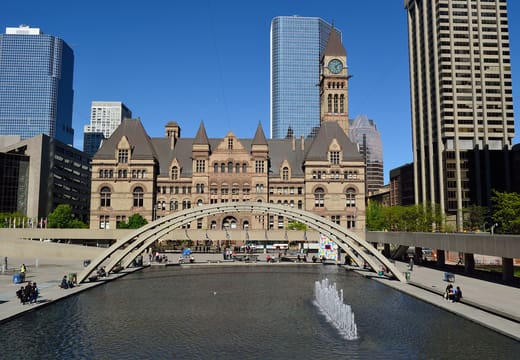
Photos show the actual places, licensed under Creative Commons and credited to their photographers.


Find hotels in Toronto
Browse live availability and compare prices for your dates.
See hotels near Toronto on Booking.comPrices are for the night of Saturday 28 November. You can change the dates on Booking.com. If you book, Roam Toronto earns a small commission from Stay22 at no extra cost to you.